-
AI-Powered
- Casey AI Assistant Chat with an AI that knows your case.
- Agentic Workflows Hand Casey multi-step case tasks.
- Document Intelligence AI summaries, entities, and organization.
- Summarization Long documents distilled to a page.
- Entity Extraction Every person, place, and org, auto-detected.
- Document Organization Bulk AI tagging and renaming.
- Proposed Facts Casey drafts facts; you approve them.
Core Platform
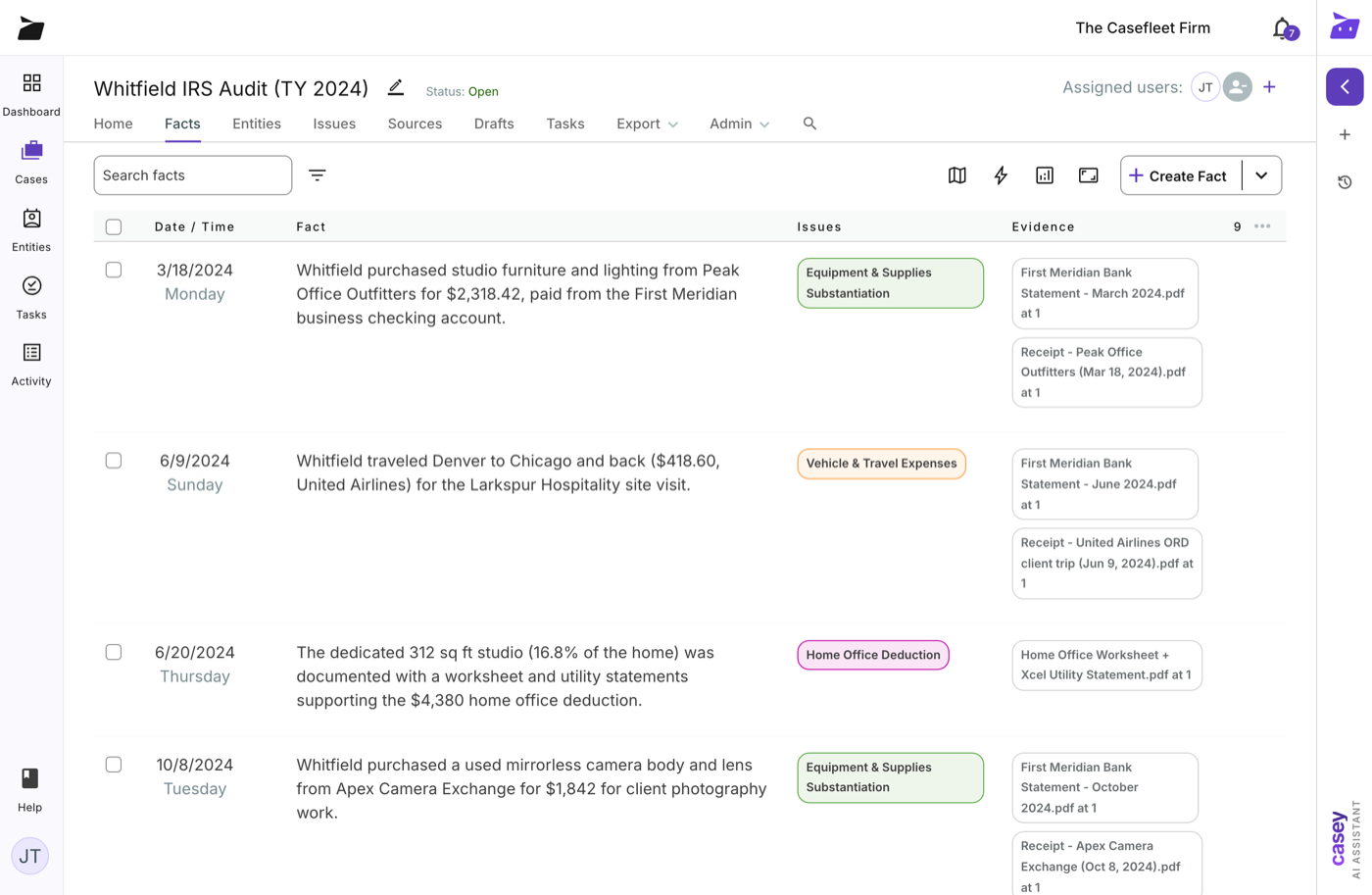
- Fact Chronologies Every fact linked to its source.
- Timeline Maker Visual timelines built from your facts.
- Case Outlines Structure issues, arguments, and evidence.
- Full Text Search Search every page of every document.
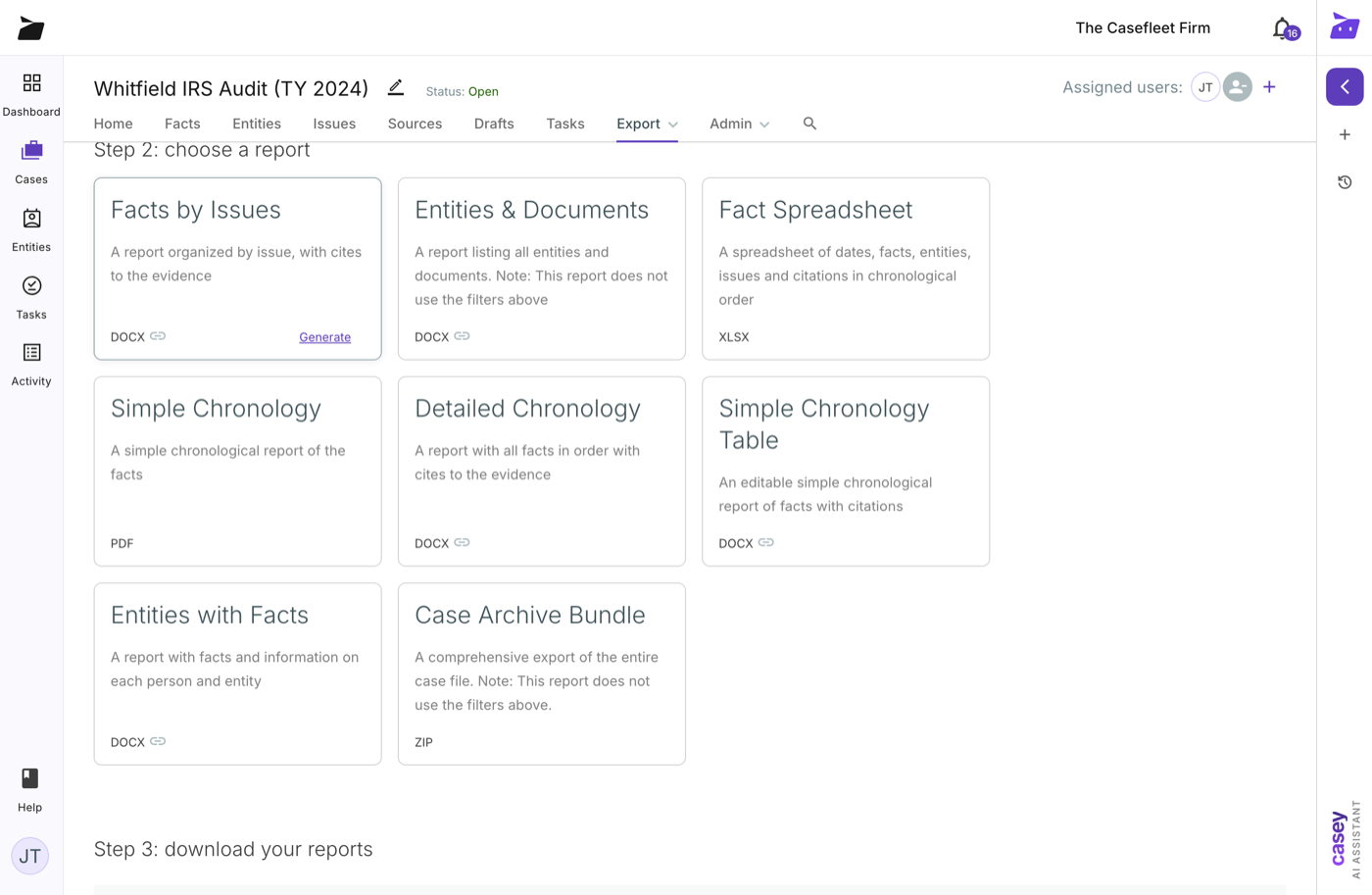
- Reporting Litigation-ready reports in a click.
- Filtering Slice facts and documents by any criteria.
Documents & Media
-
By Practice Area
By Workflow
- Case Management One workspace from intake to closing.
- Litigation Management Run discovery through trial in one place.
- Investigations Organize interviews, evidence, and findings.
- Cross-Examination Prep Question outlines tied to the evidence.
- Summary Judgment Assemble the facts and cites for your motion.
- Early Case Assessment Size up the evidence before you commit.
Beyond Litigation
- Pricing
-
Learn
- Support
- Login


- Features
- AI-Powered
- Casey AI Assistant
- Agentic Workflows
- Document Intelligence
- Summarization
- Entity Extraction
- Document Organization
- Proposed Facts
- Core Platform
- Fact Chronologies
- Timeline Maker
- Case Outlines
- Full Text Search
- Reporting
- Filtering
- Documents & Media
- Document Review
- Document Management
- Audio & Video Review
- Transcript Management
- Collaboration
- Task Management
- Activity Feed
- Software Security
- Use cases
- By Practice Area
- Employment Law
- Criminal Law
- Personal Injury
- Workers' Comp
- Medical Chronologies
- By Workflow
- Case Management
- Litigation Management
- Investigations
- Cross-Examination Prep
- Summary Judgment
- Early Case Assessment
- Beyond Litigation
- Document Summaries (AI)
- Entity Extraction (AI)
- Document Organization (AI)
- Journalism
- Writing & Plot Development
- Pricing
- Resources
- Support
- Login
Start your 14-day free trial today!
No credit card required. Just enter your work email to get started.
Start your 14-day free trial today!
No credit card required. Just enter your work email to get started.
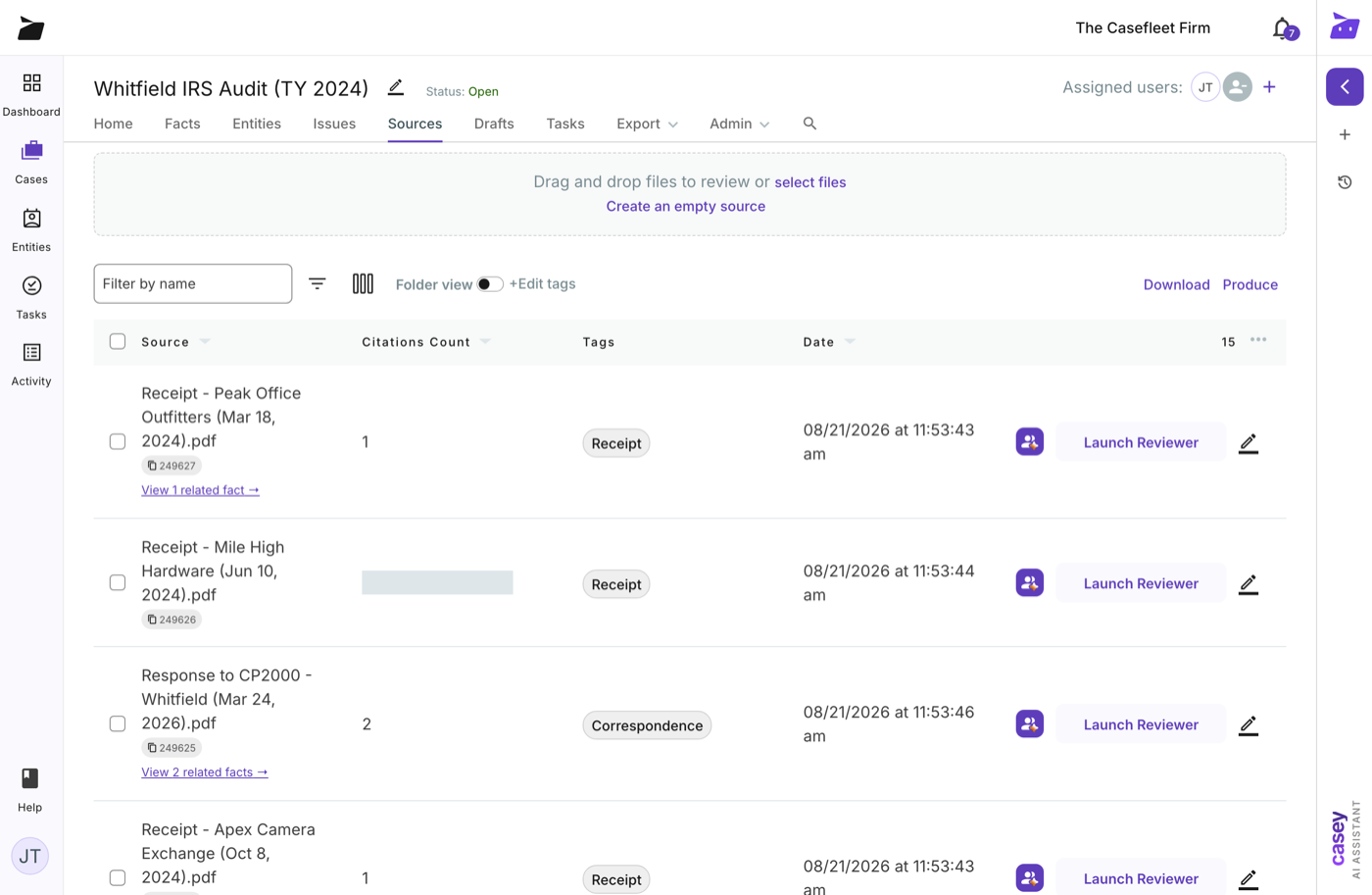
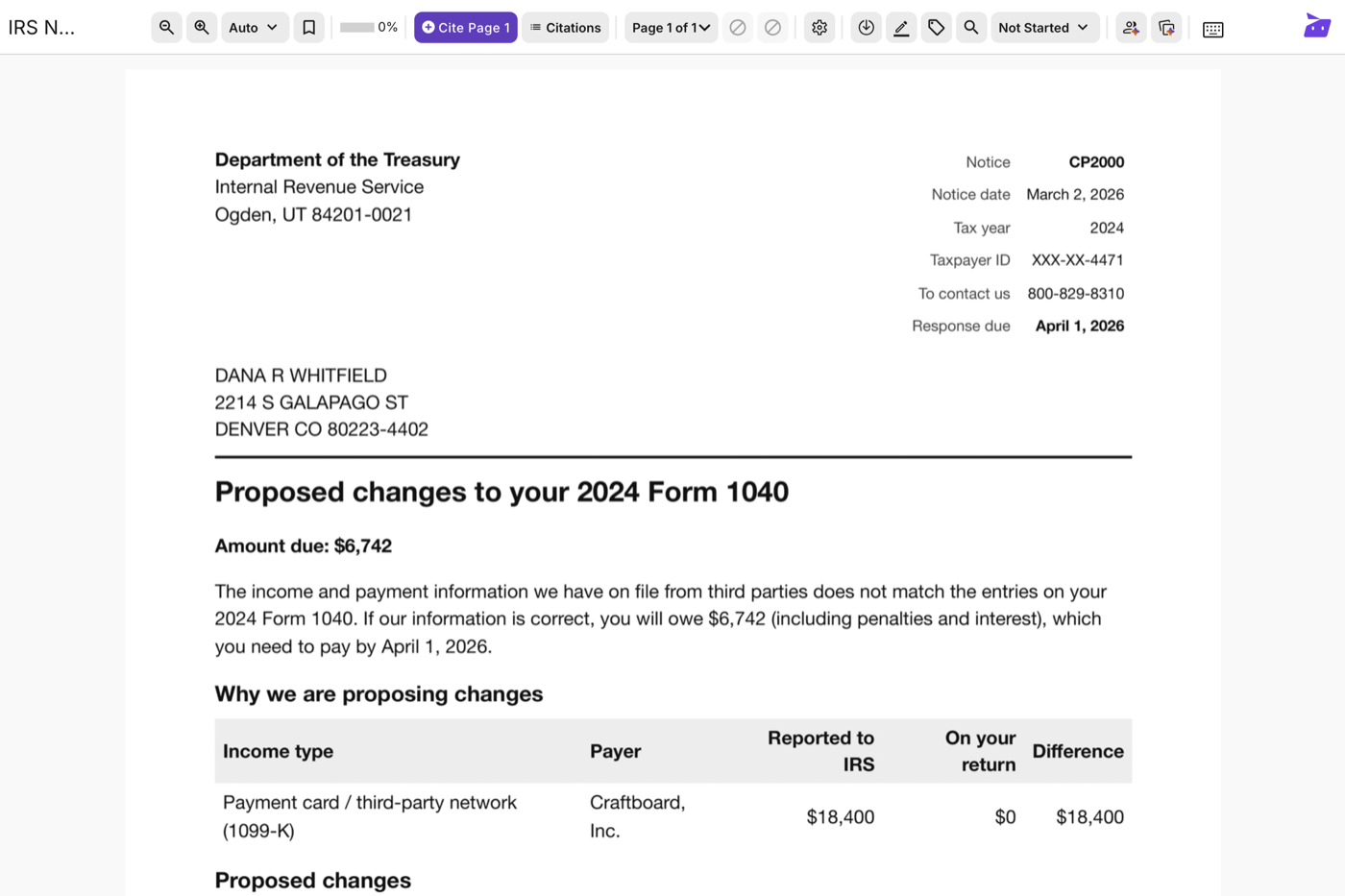
Respond to your IRS audit with a lawyer's toolkit
An IRS audit or notice is a documents problem: receipts, returns, bank statements, and deadlines. Use the same tools lawyers use to prepare their cases for trial to turn a shoebox of records into an organized, defensible response with powerful AI.